
Practising piano in an apartment: making room for music
Choose an instrument and a routine you can actually live with.
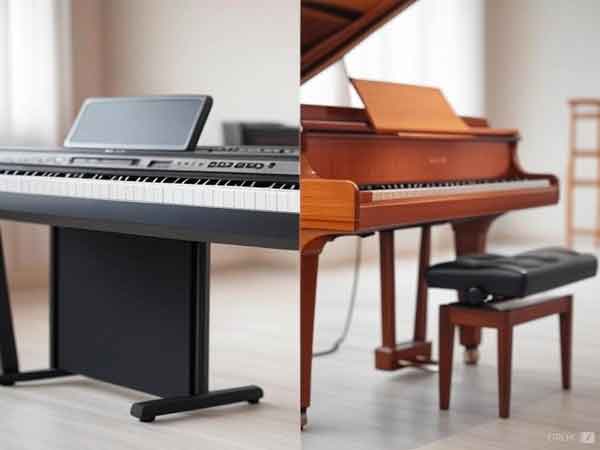
Apartment living does not rule out learning the piano. The useful question is whether you can return to an instrument between lessons without disrupting the people around you. Think about where the piano will stay, when you can play, and what a neighbour or housemate might hear. This guide focuses on that everyday setup, whether your lessons take place in Paris or online.
Start with a place you can use regularly
A stable seat, sufficient space for your arms and pedals, and light for reading music matter more than an elaborate practice corner. Leaving a keyboard ready to play removes one small obstacle to starting. If it must be stored away, allow time to set it up and check that its stand stays steady. Choose practice times you can repeat, then agree on them with anyone who shares your home.
Acoustic or digital piano?
An acoustic piano lets you work directly with its touch and resonance, but its sound cannot be turned down like a digital instrument. A digital piano can route its sound to headphones; Yamaha's product information illustrates that option. Headphones do not silence the physical movement of keys or pedals, however. Try the instrument in your actual room and listen from elsewhere in the apartment before assuming it is inaudible.
If you are considering online piano lessons for a child, check the school's instrument guidance before buying. The child will need access to a suitable piano or keyboard during the lesson itself, not just between classes.
Build a realistic practice routine
Short, purposeful sessions are often easier to fit around shared walls and busy schedules than an ambitious block that never happens. You might revisit a few bars slowly, work on one hand, then return to the teacher's correction. A rug or headphones may help with some sound, but neither guarantees silence. If sound is a concern, speak with the people affected and adjust your routine to your building.
What if you do not have a piano at home?
You can take a first in-person lesson on the school's instrument while working out how to practise afterwards. In Paris, Piano Académie also offers piano practice studios. For current booking conditions and availability, consult the official studio page. A studio can supplement home practice if you can visit often enough to revisit what you learned; it is not automatically a substitute for regular access to a piano.
For an online lesson, the instrument must be available where you join the class. Compare that practical requirement with your travel time and your available practice slots when choosing between online lessons and lessons in person.
Frequently asked questions
Will headphones make a digital piano completely silent?
No. They reduce the sound from the speakers, but keys and pedals can still make mechanical noise.
Do I need to buy a piano before my first lesson?
Not necessarily for a first lesson at the school. Before continuing, make a practical plan for playing between lessons. For online classes, confirm the required instrument beforehand.
Can a practice studio replace a piano at home?
It can help if you can book it frequently enough to follow up on your teacher's advice. The deciding factor is your actual practice routine.
Make the next step practical
The right setup is the one you can use consistently. Tell Piano Académie about your location, available instrument and preferred learning format, and the school can help you identify a suitable course.